



TLDR:
A spike in direct traffic from China is likely due to a new wave of inauthentic bot traffic that is bypassing filters, a common issue recently reported by many analytics users. This traffic often has a near 100% bounce rate and a very short session duration, which can be used to identify it. Other causes, such as broken tracking or a viral marketing mention, are also possible, but spambots are a strong possibility for this specific, widespread trend.
If you’re a marketer or website owner staring at your Google Analytics dashboard in confusion, you’re not alone. Over the past month, a mysterious surge in “direct” traffic from China has been plaguing sites worldwide—sometimes multiplying sessions by 10x or even 400x overnight. At first glance, it looks like a dream: free traffic from a massive market! But dig deeper, and the red flags scream “bots.” High bounce rates nearing 100%, session durations hovering at zero seconds, and zero engagement? Yeah, that’s not humans clicking through from Beijing.
In this post, we’ll break down what’s happening, why it’s hitting your website hard, and—most importantly—how to fight back. Drawing from recent reports across forums, X (formerly Twitter), and analytics communities, this isn’t a glitch or a viral win. It’s a coordinated wave of AI-hungry scrapers, and it’s time to clean house.
The Problem: A Sudden, Suspicious Spike
Picture this: Last month, your GA4 reports for multiple client sites light up with “direct” traffic originating from Chinese IP ranges (often tagged alongside Singapore proxies). Sessions skyrocket, but conversions? Crickets. Bounce rates hit the roof, and those “visitors” vanish faster than a magician’s rabbit.
This isn’t isolated. Since early October 2025, web pros have been flooding support threads and social feeds with the same story:
- A Google Analytics community post from October 6 detailed “sudden spikes” in bot-like traffic from China and Singapore on WordPress sites, confirming it’s inauthentic and tough for GA4 to filter.
- Over on Builder Society forums (October 9), one user vented about a “sudden spike in traffic… all direct, desktop traffic with very low engagement.”
- Facebook groups for web analytics echoed the chaos on October 13: “Sudden spike each almost 400 daily direct traffic from China.”
- Reddit threads are buzzing with users discussing unusual “traffic spikes” from Chinese IPs, sharing solutions, and seeking advice to manage the issue.
Even on X, the complaints are piling up. A digital marketer on November 7 blasted “unusual spikes from China/Singapore as AI bot traffic” polluting dashboards, while another on November 5 flagged a “surge… from China” as LLM scrapers in action. A November 9 post warned that “China is scraping like crazy,” tanking Core Web Vitals scores, and a blogger on November 8 confirmed “direct visits from IP addresses in mainland China” showing up out of nowhere.
For the past few weeks, my website has been seeing unusual traffic spikes from China and Singapore. Maybe AI bot traffic. @googleanalytics need to show us SEO marketers to block this kind of traffic (data) appearing on our GA4 dashboards.
This will not be a one time event.
— Anandu S (@byAnanduS) November 7, 2025
Haven’t checked my blog’s analytics for quite some time.
There is a surge in traffic increases in the past 3 months from… China 😱.I bet it’s their data scrappers looking for content for their LLM models or something.
It’s weird because usually traffic comes from US/Germany
— Maulana @ Nothing to Play atm (@maulana_pcfre) November 5, 2025
Yeah, it’s definitely there.
Google Analytics shows a surge of bot traffic from China,Singapore, etc. on my Website. I suspect GA can’t block these advanced bots. Please look into this.@googleanalytics @Google#GoogleAnalytics #WebAnalytics #Analytics #Google #Bot #Crawler #WebTraffic pic.twitter.com/0emLz6MZyx
— Jenson M John (@jensons) September 25, 2025
I expected more of the OpenAI/Claude/Gemini/Bing/Yahoo etc scrapers adding up.
But China is scraping like crazy.
It’s also affecting CWV I believe.
Surprised I haven’t seen @lilyraynyc or @CyrusShepard or @mattdiggityseo or any other viral SEO…
— Mario Peshev (@no_fear_inc) November 9, 2025
and more
Google Analytics shows a surge of bot traffic from China,Singapore, etc. on my Website. I suspect GA can’t block these advanced bots. Please look into this.@googleanalytics @Google#GoogleAnalytics #WebAnalytics #Analytics #Google #Bot #Crawler #WebTraffic pic.twitter.com/0emLz6MZyx
— Jenson M John (@jensons) September 25, 2025
The pattern? It’s global, English-site heavy, and perfectly timed with the explosion of Chinese AI models (think Alibaba’s Qwen or DeepSeek) devouring web data for training. These bots aren’t here to buy—they’re here to copy.
Why “Direct” Traffic? And Why Now?
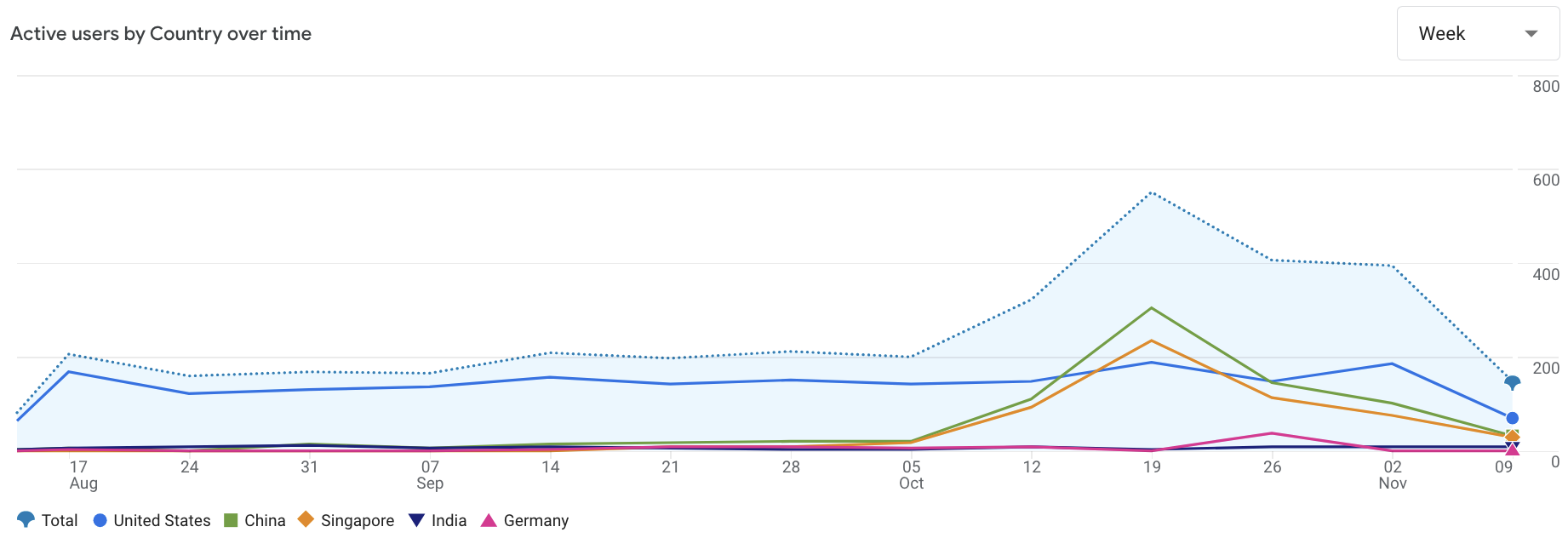
In GA4, traffic without a clear referrer (like bots using VPNs or direct IP hits) defaults to “direct.” Add in desktop user agents and bursty patterns, and you’ve got a recipe for dashboard distortion. This wave bypasses standard bot filters, making it sneakier than your average SEO spam.
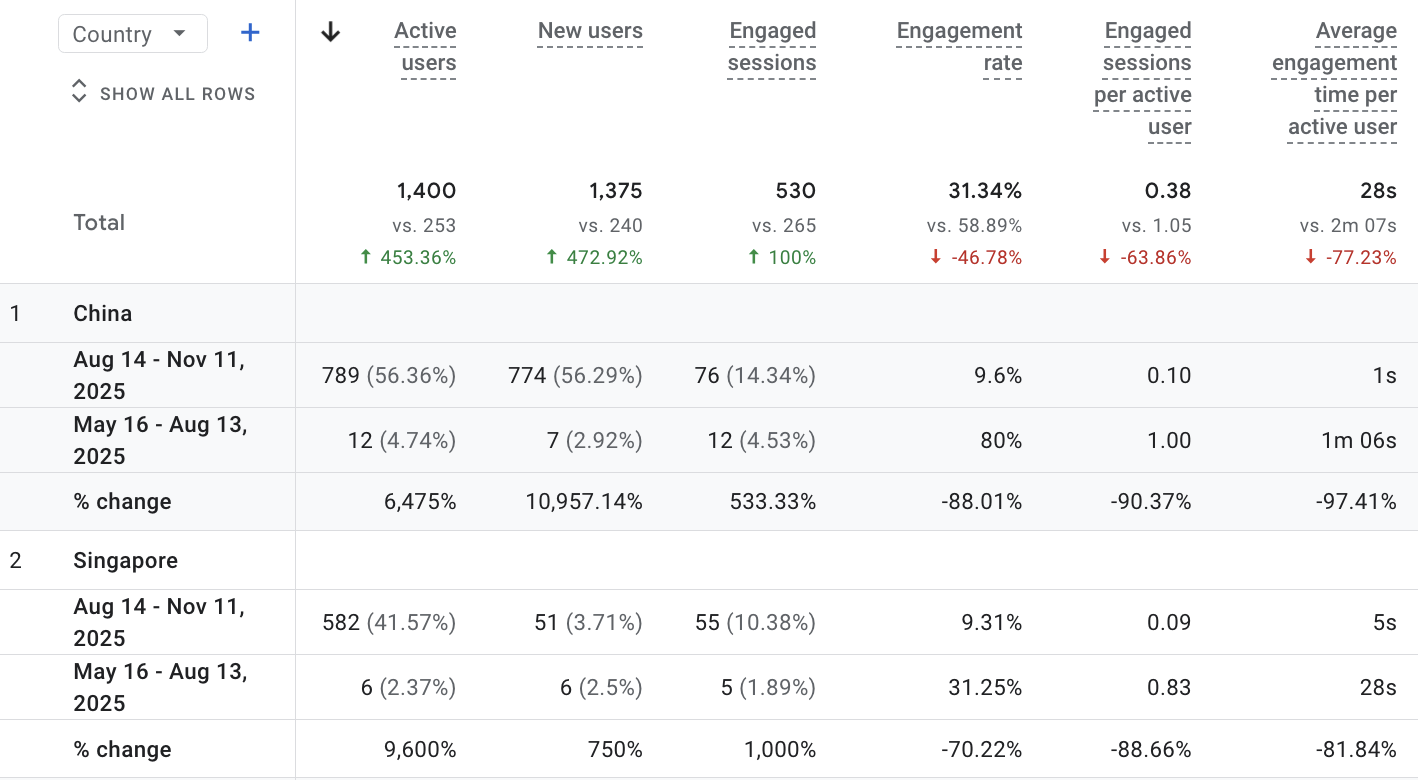
Key Identifiers of Bot Traffic:
- Near 100% Bounce Rate: Real users explore; bots bounce instantly.
- Session Duration ~0 Seconds: No time to read—that’s scraper speed.
- No Engagement: Zero events, scrolls, or clicks.
- IP Clusters: China Mobile, Unicom, or Telecom ASNs, often with Singapore sidekicks.
But let’s not jump to conclusions. While bots are the prime suspect, rule out these legit alternatives:
- Tracking Errors: Broken UTM tags or campaign misfires can reroute traffic to “direct.”
- Viral Wins: An influencer shoutout or PR hit could drive direct visits—check for spikes aligning with social mentions.
- Caching Glitches: Server-side caching might strip referrers, misclassifying traffic.
Cross-reference with Google Search Console (no organic boom?) or server logs to confirm. If it’s bots, the data will scream it.
The Culprit: AI Scrapers on Steroids
English and global sites are goldmines for Chinese AI firms, as only ~1.3% of top websites are in Mandarin. This October surge? Likely tied to new model rollouts needing fresh datasets. It’s not malicious in the hack sense—just relentless harvesting. But it bloats your metrics, skews benchmarks, and could even ding your site’s performance scores.
Databox and Reddit threads back this up: Users report identical trends, urging quick blocks to restore data sanity.
How to Fight Back: Your Action Plan
Don’t panic—reclaim your analytics with these steps. Start on staging sites to avoid disruptions.
1. Verify and Isolate the Spike
- Dive into GA4: Filter sessions by country (China) and date (last month). Spot those 100% bounces and zero-second sessions? Bots confirmed.
- Export pre-spike data for clean baselines.
2. Leverage GA4’s Built-Ins
- Enable bot filtering (Admin > Data Streams > Configure > Bot filtering).
- Add internal filters: Exclude countries, user agents (e.g., “HeadlessChrome”), or empty referrers.
3. Go Nuclear: Block at the Source
- IP Blocking: Use .htaccess, Cloudflare GeoIP, or IPinfo.io lists. Sample .htaccess rule:
<RequireAll>
Require all granted
Require not ip 1.0.1.0/24  # Expand with China ranges
Require not ip 103.0.0.0/8  # Singapore proxies example range, adjust accordingly
</RequireAll>
Refresh lists monthly—bots evolve.
- Considerations:
- IP Lists: Make sure to use accurate and regularly updated IP lists for the regions you intend to block.
- Blocking by IP Location: Tools like Cloudflare can offer more dynamic solutions, allowing you to block traffic based on geographic location (GeoIP).
- Proxies and VPNs: Be aware that users might bypass blocks via proxies or VPNs, which makes precise blocking more challenging.
- Updates and Testing: Always test configuration changes in a safe environment to avoid accidental blocking of legitimate traffic.
- Legal and Ethical Considerations: Be mindful of any legal implications or ethical considerations when blocking entire IP ranges.
- Considerations:
- Advanced Tools: Cloudflare Turnstile (free CAPTCHA) or rate limiting for suspicious patterns.
- CAPTCHA/JS Challenges: Force human-proof on high-risk pages.
4. Hunt for Real Wins
- Scan for untagged campaigns or brand buzz.
Google’s teasing better bot detection in upcoming GA updates, so this might fade. But with AI scraping ramping up, vigilance is key.
Turn the Tide on Bot Spam
This China direct-traffic spike is a wake-up call: Your data’s under siege, but you’re armed now. Clean it up, and you’ll uncover the real insights driving your website’s growth. If bots are bloating your reports, act fast—your baseline (and sanity) depends on it.


